
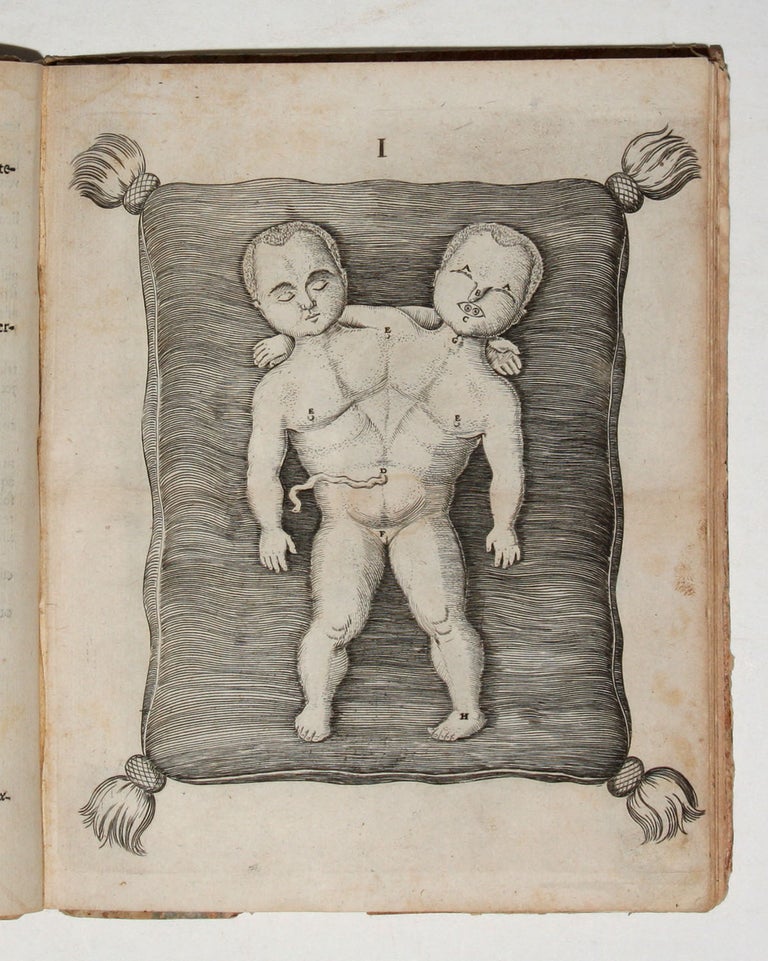
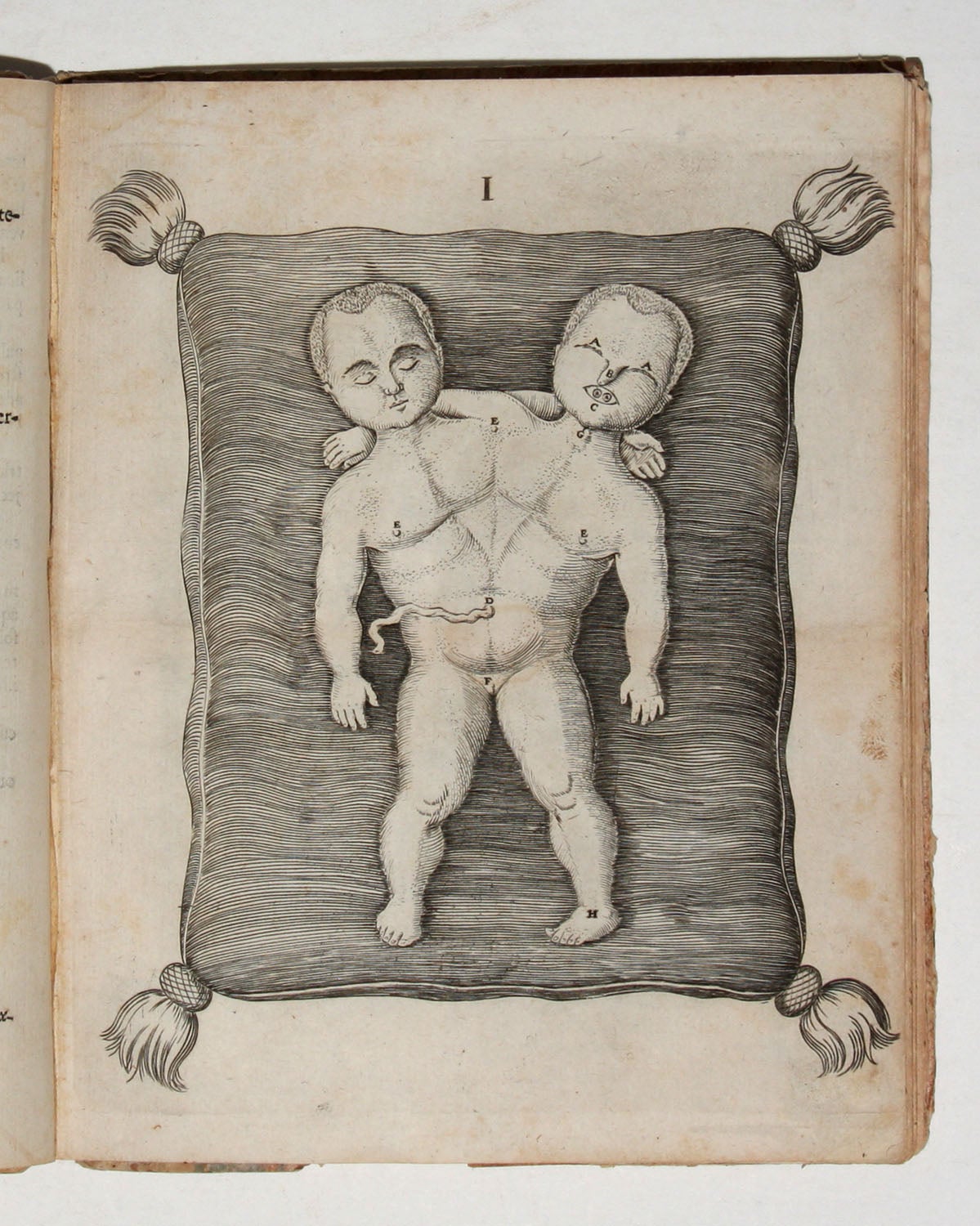
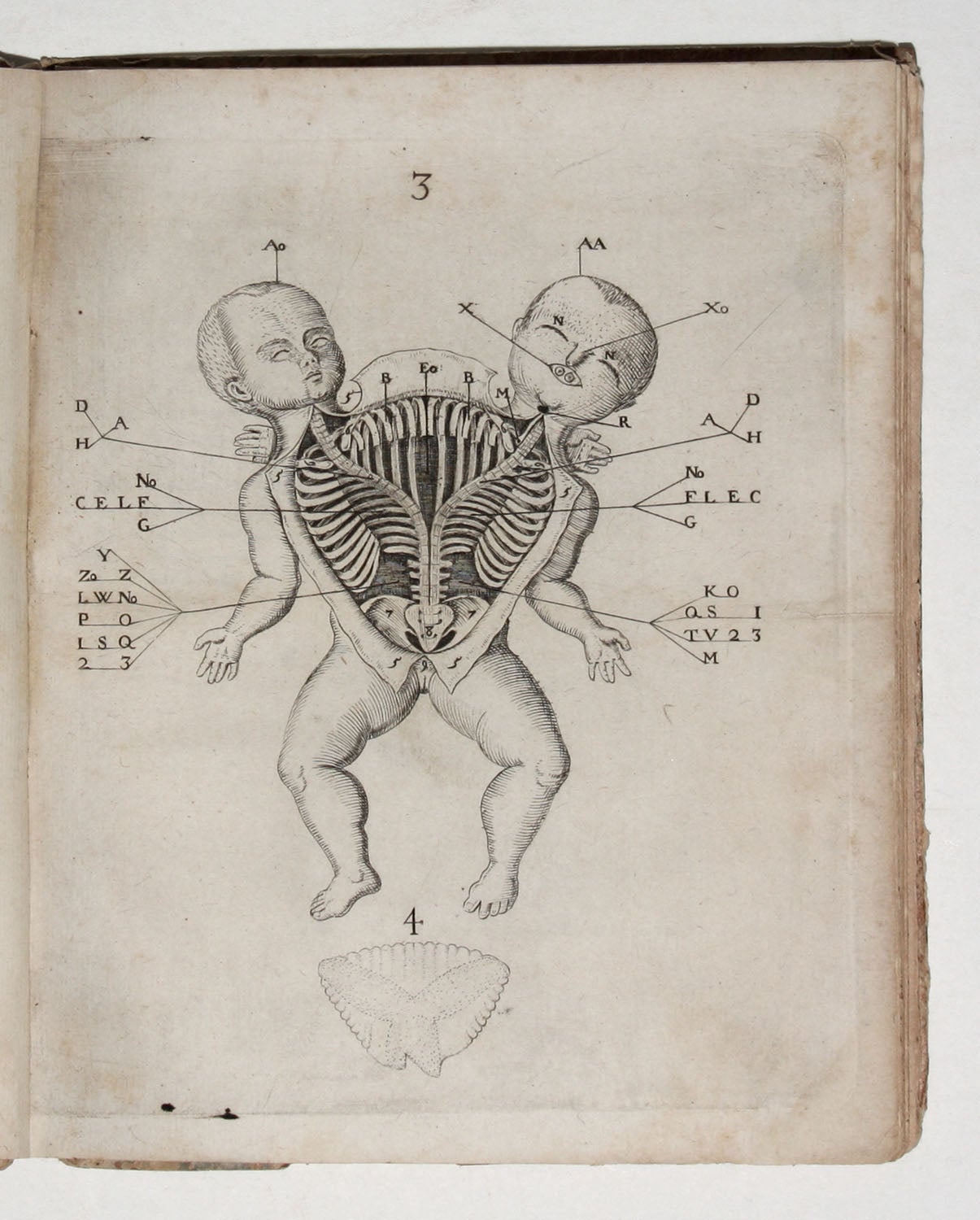
Specimina Anatomica, cum clarriss. doctissimorumque virorum epistolis aliquot & testimoniis.
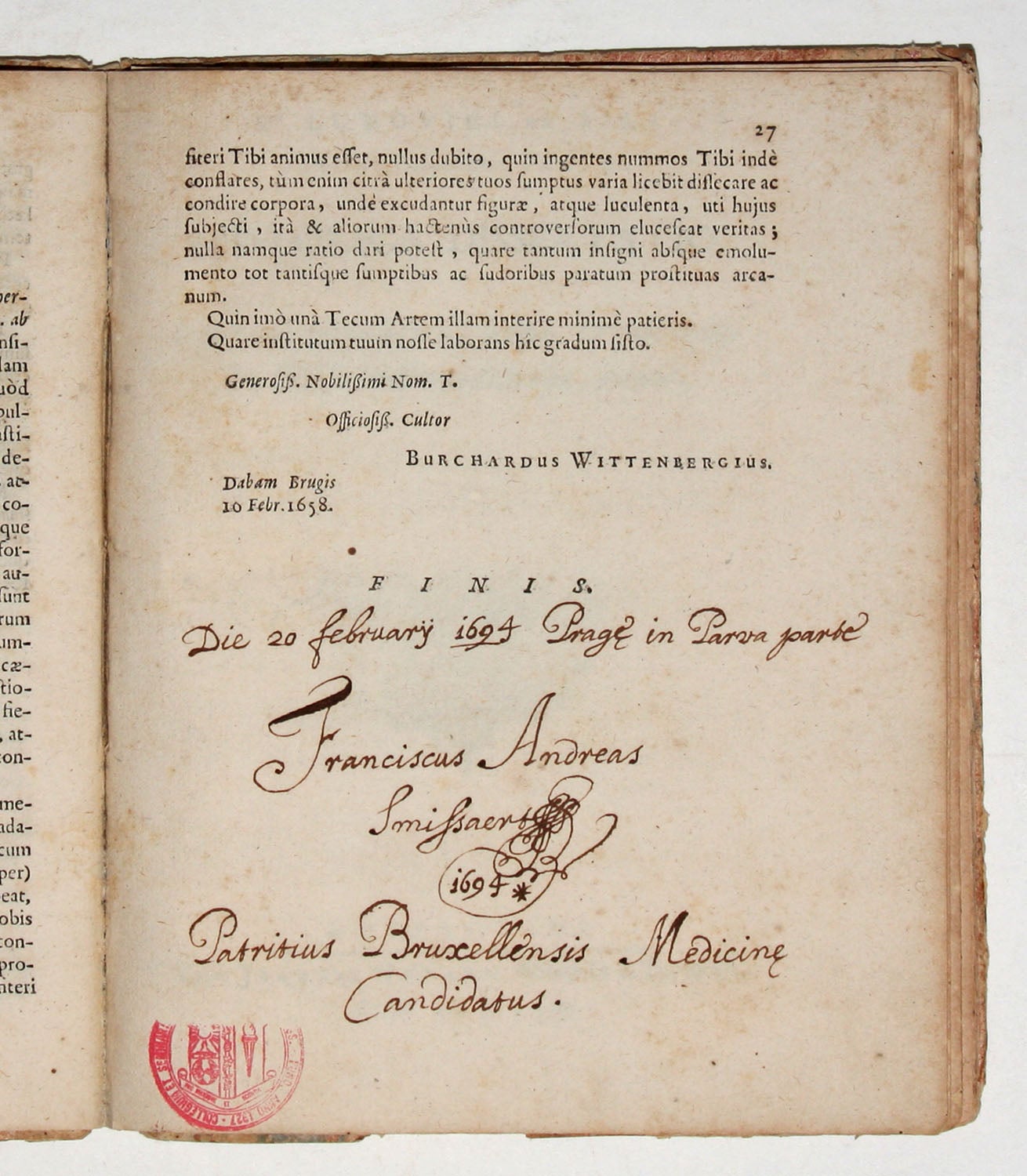
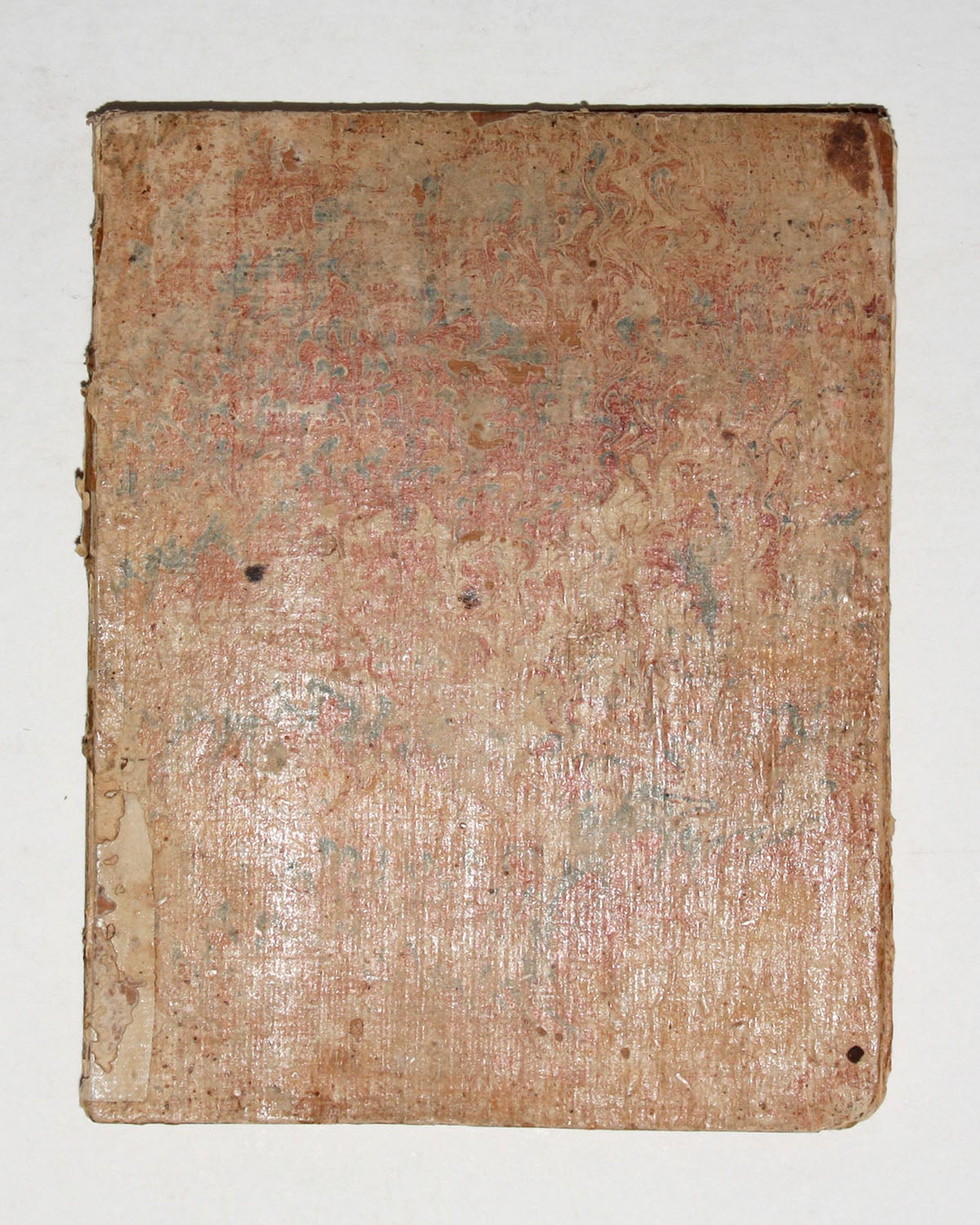
4to (19.8 x 15.5 cm). 27 pp., and four leaves of engraved plates. Marbled paper over thin pine boards with some cracking, and a worm hole in the back continuing through Major's text. Lightly foxed throughout, with repaired tear to title page of <I>Epistolica Disseratio</I>. Major's pamphlet browned. Annotations on inside covers, and ownership inscriptions dated 1694 and 1699 by Andreas Smissaert, a Franciscan medical candidate in Brussels; Saint Hyacinth College and Seminary library stamp.<BR><BR>
[BOUND WITH:] BILS, Lodewijk de. <I>Epistolica Dissertatio.</I> Rotterdam, Joannis Naerani, 1659. 6 pp. and one engraving.<BR>
[WITH:] BILS, Lodewijk de. <I>Epistola Apologetica</I>. Rotterdam, Arnoldus Leers, 1661. 10 pp.<BR>
[WITH:] BILS, Lodewijk de. <I>Omnibus verae Anatome Studiosis</I>. Rotterdam, Joannem Naeranum, 1660. 4 pp.<BR>
[AND WITH:] MAJOR, Johann Daniel. <I>Historia anatomica calculorum...</I> Leipzig, Johann Erich Hahn, 1662. [28] pp.; engraved vignette on title page, wood-cut diagram on p. [26]. Extremely rare group of anatomical pamphlets in their first Latin edition by Lodewijk de Bils (1624-1670), a nobleman from Flanders, who advertised a chemical method of turning bodies into transparent teaching tools by preserving and embalming them in a wax-like substance. The sammelband includes his treatises on the gall-bladder (Epistolica Dissertatio) and on the dissection of a pair of siamese twins (Specimina Anatomica), as well as a letter (Epistola Apologetica) to his major detractor, Thomas Bartholinus, which Bils penned under another name. The final work by Bils, Omnibus verae Anatome studiosis, refers to the specimen museum that he planned to erect in Rotterdam using these methods, and the particular glands and veins he intended to display. Bils published his method selectively as a form of investment prospectus: he hoped to raise money by subscription with a goal of twenty thousand pounds. If successful, he promised not only to provide the details of this treatment to his investors, but also to embalm numerous specimens for the museum in the Rotterdam anatomy theater. “Investors above 25 guilders would have been offered a written description of the method of preparation and could also be trained in person if they chose to come to Rotterdam” (Margócsy). Bils did not himself read Latin, and as the Epistola Apologetica pamphlet suggests, his theories were often discredited. However, the fact that his works were translated from his native Dutch suggests that he did indeed create a demand and a somewhat lasting scholarly public for his innovative investigations. The fact that this particular volume contains only the Latin editions, and has an ownership annotation by a medical student some years after de Bils’ death, reinforces this notion. As Daniel Margócsy has shown, the rage for anatomical preparates was only beginning in the Netherlands, and it would be fed by the efforts of Frederik Ruysch, among others. Bils’ pamphlets were originally published in Dutch, generally the year before the Latin. Bound with the present sammelband is a contemporary anatomical text by Johann Daniel Major (1634-1693) discussing several other 17th-century authorities such as Johann Georg Schenck.
* Dániel Margócsy, “Advertising Cadavers in the Republic of Letters: Anatomical Publications in Early Modern Netherlands,” <I>British Journal for the History of Science</I> 42/2 (2009), pp. 187–210.
Price: $3,850.00